
Vrosa Operations
Run the work, not just the quote.
Operations brings jobs, scheduling and dispatch onto the same customer record, so the office and the field work from one plan.
From the first call to a finished job
- 1
Customer record
Who, where and how to reach them.
- 2
Estimate
Quoted, followed up and accepted.
- 3
Job
The accepted work, with everything attached.
- 4
Schedule
Visits planned by team and person.
- 5
Dispatch
The right person, with the right details.
- 6
Completed work
Notes and status from the job.
Illustrations show the direction of the platform. Guided demos focus on customer records and estimate follow-up.
From accepted estimate to finished job
When a customer says yes, the work should not start with retyping. The customer, the place, the scope and the people are already on the record, so a job begins with everything it needs.
Operations is where the accepted estimate becomes scheduled work, and where the office and the field see the same plan.
- Jobs created from accepted estimates
- Scheduling by team and person
- Dispatch with the details a technician needs
Operations
- Turn an accepted estimate into a job
- Plan visits on a schedule
- Send the right person with the right details
- Keep job history on the customer record
Everything the work needs
Four connected parts, all attached to the customer record.
Illustrations show the direction of the platform. Guided demos focus on customer records and estimate follow-up.
Turn an accepted estimate into a job with the customer, place, scope and contacts already attached.
Jobs
- Created from an accepted estimate
- Customer, place and contacts attached
- A history you can read later
Jobs
- Created from an accepted estimate
- Customer, place and contacts attached
- A history you can read later
Jobs
Turn an accepted estimate into a job with the customer, place, scope and contacts already attached.
Scheduling
- A calendar by team and person
- Rescheduling without retyping
- Visits tied to the customer record
Scheduling
See visits on a calendar, by team and by person, and move them when plans change.
Dispatch
- The right person for the job
- Site contact and pinned notes
- Status the office can see
Dispatch
Send the right person with the details they need, such as the contact for that site and the notes pinned to the customer.
Field updates
- Status updates from the field
- Notes and photos on the job
- A mobile experience for technicians
Field updates
Notes and status from the job site flowing back to the office.
Built on the Vrosa customer record
Operations starts from the records, estimates and roles already in Vrosa.
Customers, people and places with roles are already modeled, so a job knows who to call and where to go.
Explore customer records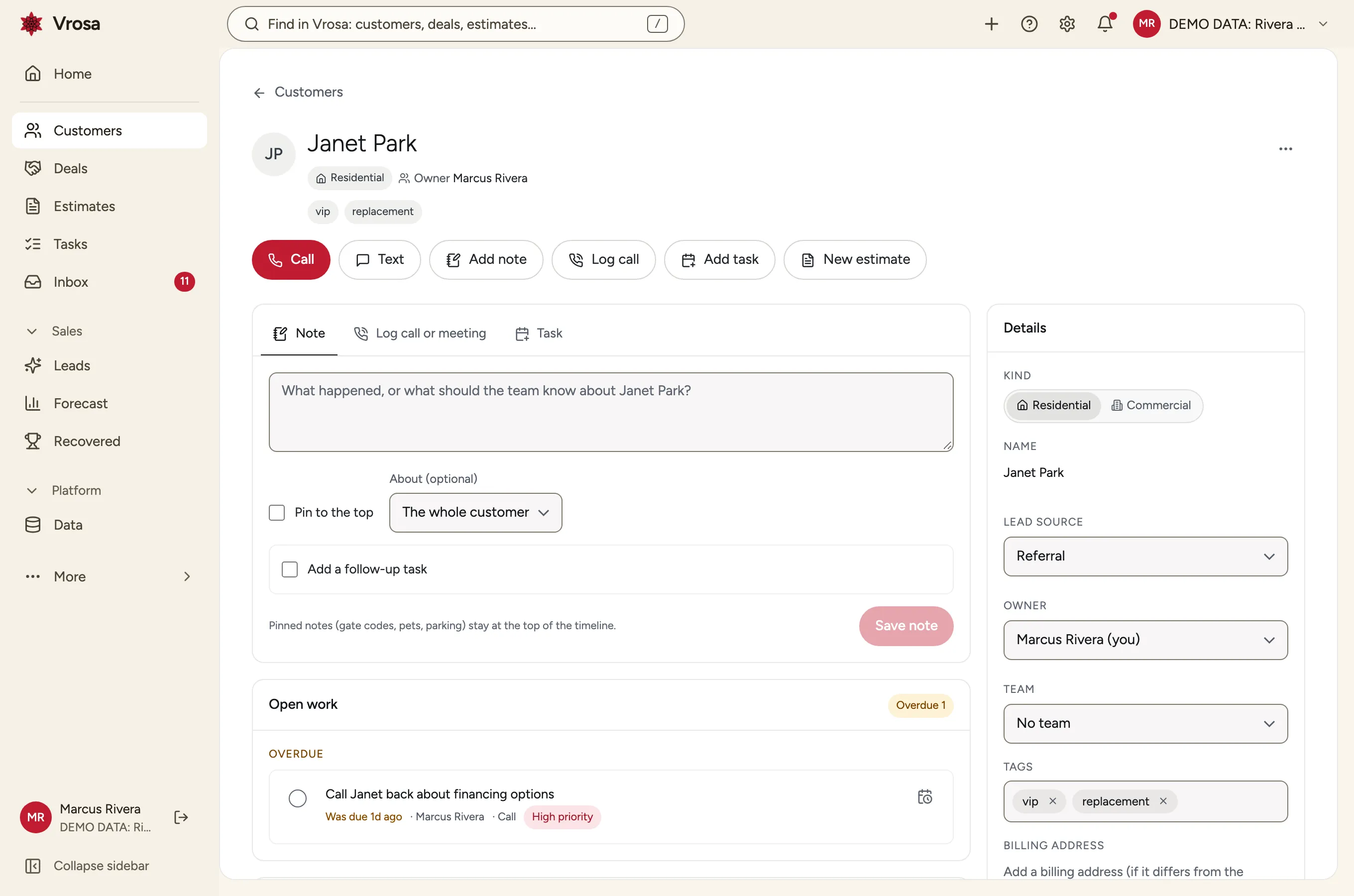
The customer record
Customers, people and places with roles are already modeled, so a job knows who to call and where to go.
Explore customer records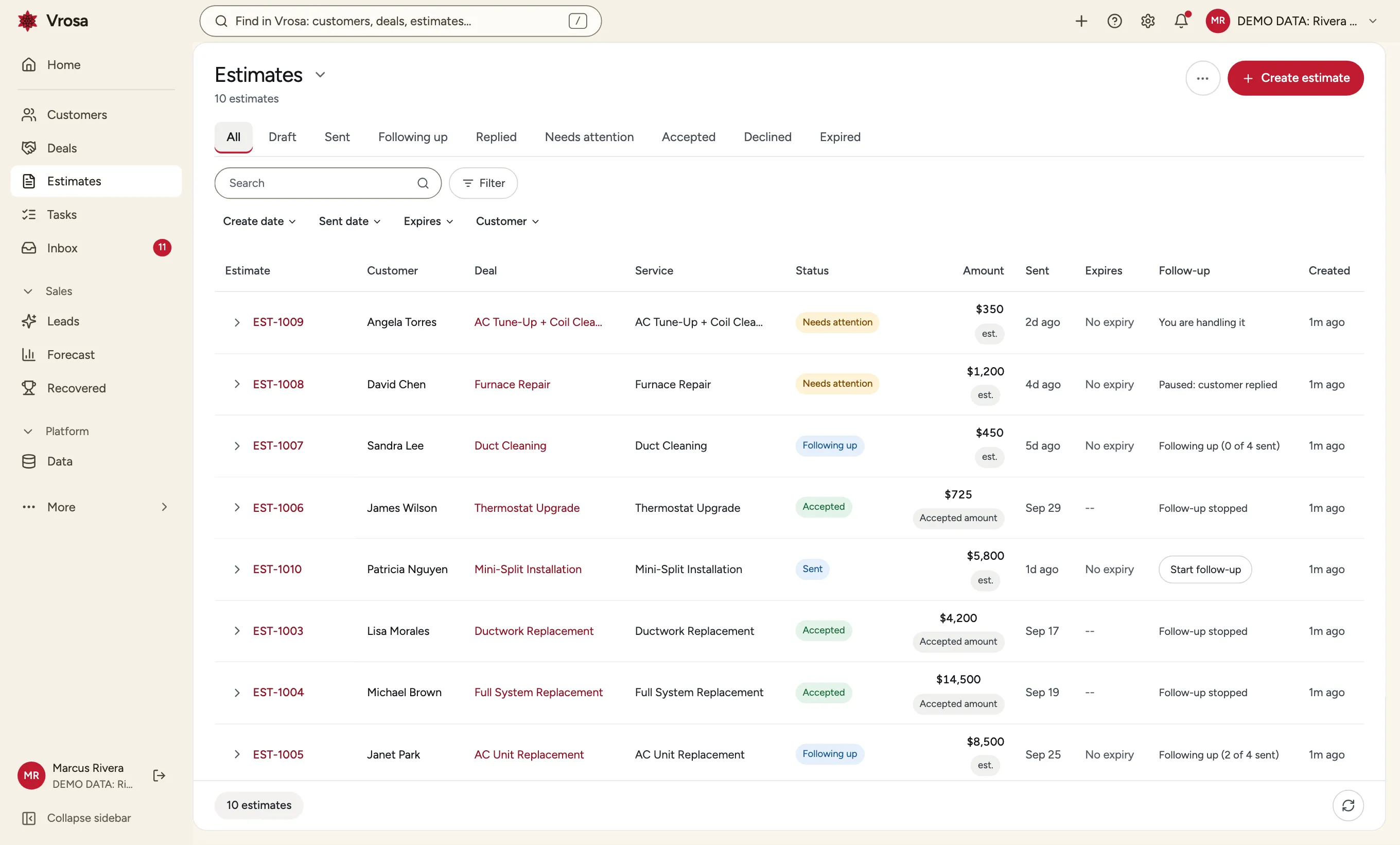
Accepted estimates
Estimates already end as Accepted or Declined, which is the natural starting point for a job.
Explore estimate follow-up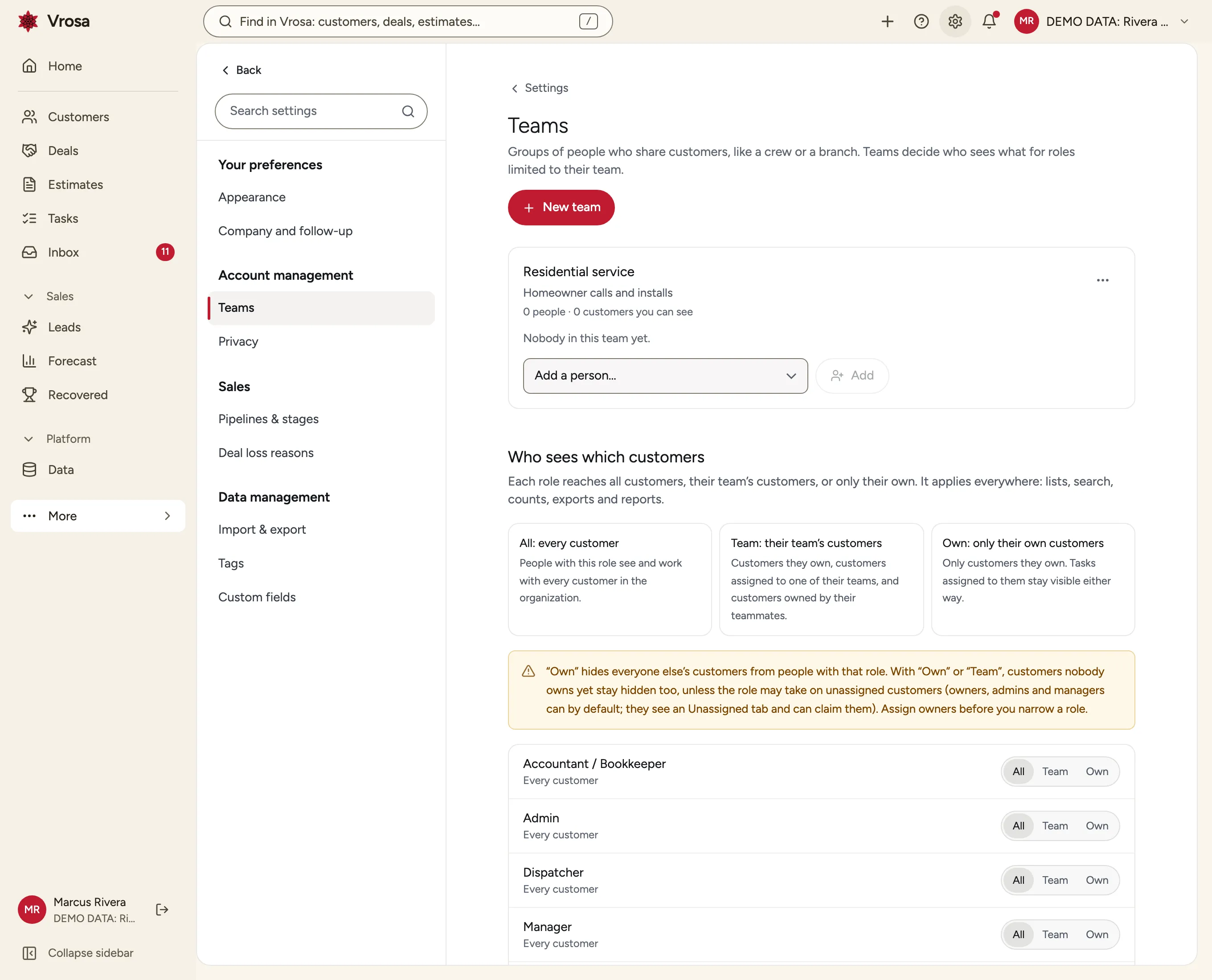
Roles and team access
Dispatcher and technician roles and team-based access are already part of Vrosa, so the right people see the right work.
Explore Team
Tell us how you run jobs today
We are shaping Operations around real home-service workflows. Tell us about yours.
One record from the first call to the finished job
Every step starts with the right data, because it all lives on the same customer record.
Know
Customer records with people and places.
Win
Estimates followed up and accepted.
Do
Jobs, scheduling and dispatch on the same record.
Part of one connected platform
Every area of Vrosa builds on the same customer record.
Questions
What does Operations cover?
Jobs, scheduling and dispatch, built around the customer record so the office and the field work from the same plan.
What can I see in a demo?
Guided demos focus on customer records, estimate follow-up and team access, which are the foundation Operations builds on. Ask us what is ready to show.
Will I have to re-enter customers when jobs arrive?
No. That is the point of building on the customer record: a job starts from a customer and an accepted estimate that already exist.